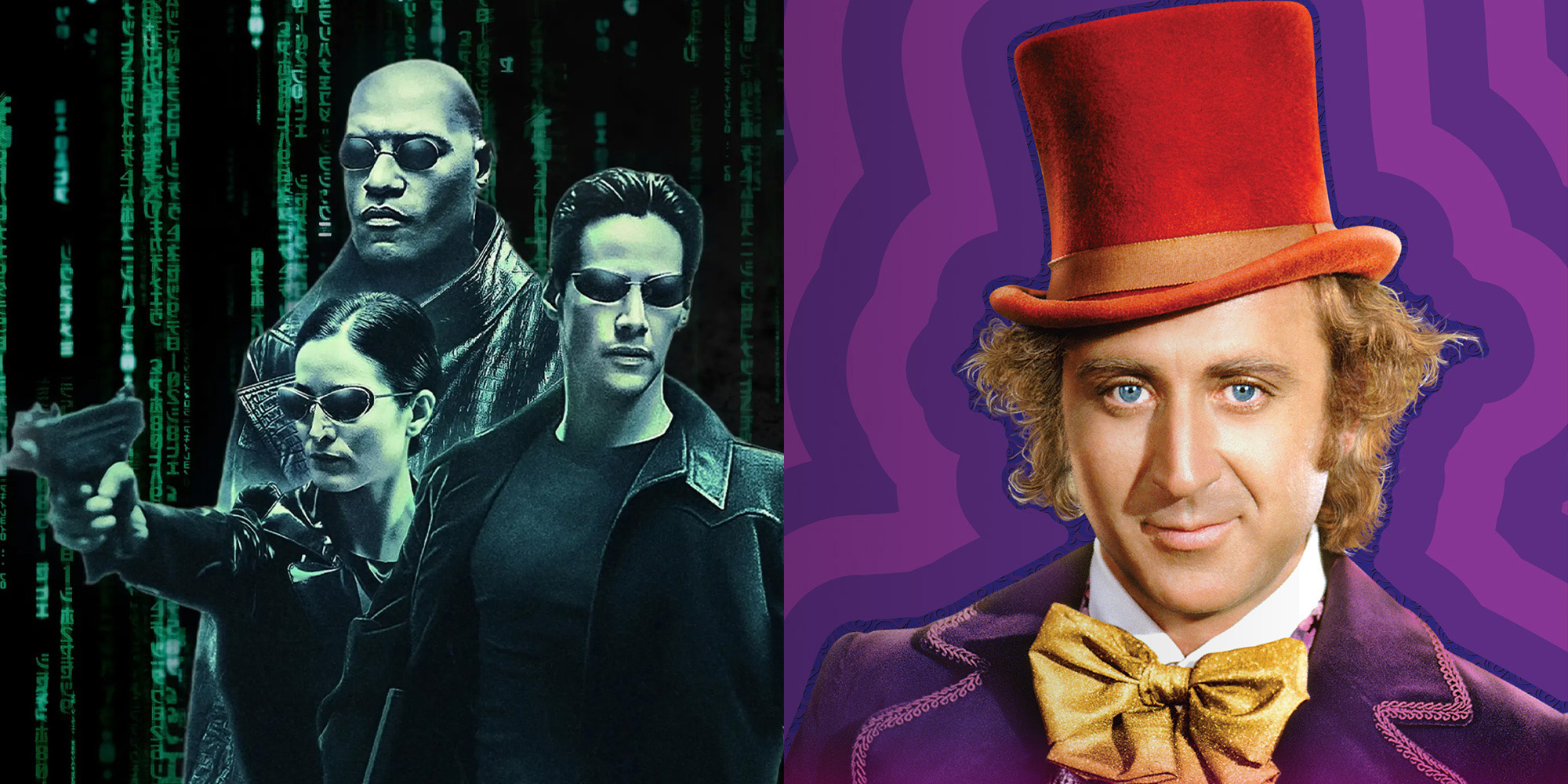
This year, MakeMake and COSM have teamed up twice to take audiences on an immersive journey through some of their favorite movies, including The Matrix and Willy Wonka & The Chocolate Factory. These Shared Reality projects incorporate state-of-the-art technology into a theatrical experience, and require some seriously good CG, which is where we come in. MakeMake Creative Director Kirk Shintani, CG Supervisor David Hyatt, and CG Artist Dustin Mellum share more about their experiences on these two projects.
Having worked on both The Matrix and Wonka Shared Reality experiences, how did your creative process evolve between the two?
Kirk Shintani: For Wonka, we were able to drive more of the initial creative process, leaning on our production experience to try and push the boundaries of what we did on The Matrix. We wanted to make sure the second film exceeded the first in every possible way from an audience perspective.
David Hyatt: This type of venue requires a new way of thinking about composition, framing and motion — we had to discard many of the rules of traditional film making. It was a joy to watch some of those new concepts and methods mature between projects, and see how much the Wonka team was able to push boundaries on this show as a result of what was learned from The Matrix.
Dustin Mellum: The goal for both projects was to immerse the viewer in the world of the film. The Matrix being an action sci-fi film, of course we leaned heavily into the action scenes with the various gun battles and explosions that correspond with the film. For Wonka, the team pushed the whimsy of the film, avoiding photorealism in favor of saturated colors and a more toy-like appearance to the sets, with the goal of having children and parents alike craning their necks to avoid missing any details.
How did your team approach building visuals that not only complement these films but interact with them?
David: For all of these projects, considerable attention has been given to creating an immersive experience while taking care to remain a complement to the film — “The movie is the front man, we are the backup band” has been our mantra. It was exciting to see how well something as simple as timing a lightning flash or flickering a fluorescent bulb to match action on screen could help integrate our environments. Those touches give each big moment an added punch.
Dustin: The first factor to consider was to ensure the space felt correct in scale and grandeur. It is actually possible to make the space feel too small if a proper layout is not implemented. We built our sets as if they all extended out from the actual venue walls, not within. We've found that true immersion is best achieved when grounded in a sense of reality — a feeling that the audience can push through the dome walls and exist in the worlds we've created. The largest challenge we faced, as we learned about the ins and outs of the venue, was the sheer level of detail the viewer sees at that size and resolution. Keeping visual fidelity crisp and not pixelated was always a consideration, from initial asset creation to the final delivered shots.
Were there any notable challenges you faced?
David: The sheer scope of the deliverable stands out to me. The Matrix produced somewhere on the order of 500,000 frames of 12k content, and I’m sure Wonka has landed somewhere in that vicinity at minimum. Compared to an average advertisement or title sequence, we are producing significantly more content, both in duration and resolution, along with the additional complexities of a stitched 360 environment. This amplifies challenges to solve nearly any problem, and magnifies the impacts of any oversight. The creative solutions the team has devised to combat such a daunting task has been quite impressive.
Dustin: The most challenging aspect from a logistical standpoint is that the visuals we are creating run the full feature length, at a very high resolution and at 60 frames per second. We have an extremely talented team, but not necessarily all the resources at the disposal of a larger feature film effects company. At every step we are solving problems to deliver the highest quality visuals possible, using all the creative and technical know-how of every single team member.
Tell us about a moment from either project that really wowed you.
Dustin: I am always surprised by which shots enthrall the audience the most. Everyone on the team has their favorite shots, and what we find stimulating as artists isn't always the most impactful for the audience. I like to think that discrepancy helps inform us with regards to improving future projects of this type.
David: There was a moment during the Matrix the first time we showed falling code during the opening sequence for a review. I had envisioned it as a bit of a filler, or ambient element when I first saw it on my monitor, so the excitement that followed when we first saw that shot in-venue was certainly unexpected. There were hoops, hollers, and a round of applause. There have been numerous occasions where something simple but elegant has had as much audience impact as our big shots filled with effects and razzle-dazzle.
Kirk: The most interesting part of what we've been able to accomplish on these films is to provide an experience that isn't just visual. The amazing technology that COSM provides, allows us to explore moments that resonate with audiences not just visually, but emotionally and physically. In The Matrix one of those moments is super simple but shows off the power of the venue: when Neo is trying to escape the Agents through the office window, and we pan down to reveal the street below. The only way that moment has the impact that we're looking for is through the technology of the immersive screen, and the world building that we did. When you watch that moment, you feel as if you're right on the edge of the skyscraper with Neo, and you feel it in your stomach. In moments like that one, we were able to leverage the venue in a unique way.